
Who Pays When Something Goes Wrong in Space? The Liability Convention Explained

Quick Answer
The Liability Convention is an international treaty that establishes rules for determining who is responsible when a space object causes damage.
Created in 1972, the Convention on International Liability for Damage Caused by Space Objects expands on the liability principle established by the Outer Space Treaty. It addresses a fairly simple question with some complicated answers: If something goes wrong in space, who pays for the damage?
Under the convention, a "launching state" can be held responsible for damage caused by its space objects. If a space object causes damage on Earth's surface or to an aircraft in flight, the launching state is generally absolutely liable, meaning that liability does not depend on proving that the state was at fault, because space as an entity cannot assume fault. Damage occurring in outer space is treated differently and generally depends on whether the damage resulted from fault.
That might sound straightforward, but space missions can involve multiple countries, private companies, launch providers, satellites, and pieces of debris.
So what exactly counts as a launching state? What happens when two satellites collide? And how does this treaty apply to today's increasingly crowded space environment?
Let's break it down.
Why Was the Liability Convention Created?
The Outer Space Treaty, which entered into force in 1967, established some of the basic rules of international space law. Among other things, it states that countries can be internationally liable for damage caused by their space objects.
But that raised another question:
What actually happens when that damage occurs?
The Liability Convention was created to provide more detailed rules for dealing with these situations.
The United Nations adopted the convention in 1971, it opened for signature in March 1972, and it entered into force on September 1, 1972.
The idea was fairly practical. Space activities are complicated, and even with careful planning, accidents can happen. The treaty created an international framework for determining responsibility and seeking compensation when space objects cause damage.
In other words, the Outer Space Treaty established the principle, while the Liability Convention helped explain how liability works in practice.
If you haven't read our blog The Outer Space Treaty Explained: What Are the Rules for Space?, that's a good place to start.
What Exactly Is a "Launching State"?
One of the most important terms in the Liability Convention is launching state.
And it doesn't always mean the country that physically built the rocket.
The convention defines a launching state as a country that:
launches or procures the launching of a space object; or
provides the territory or facility from which the space object is launched.
This means that multiple countries can potentially qualify as launching states for the same space object.
For example, imagine a satellite is built by a company in one country, launched from a facility in another country, and the launch itself is arranged through a third country.
Determining responsibility isn't necessarily as simple as asking, "Who made the satellite?"
The convention was designed to account for the fact that space missions can involve several different countries.
That becomes especially important as international and commercial space missions continue to grow.
However, it is important to remember that some countries sign agreements before launches to declare which country is responsible for any potential damages and liabilities.
Does the Liability Convention Apply to Private Space Companies?
This is where the Liability Convention connects to the changing space industry.
When the treaty was created in the early 1970s, commercial space companies did not have the same role they have today.
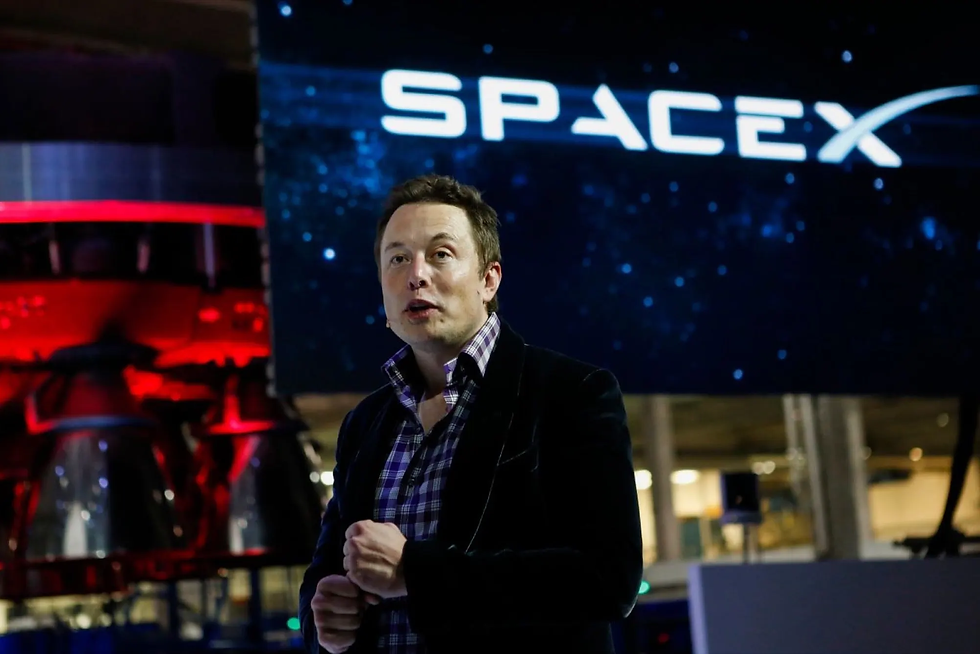
Today, private companies build satellites, provide launch services, operate spacecraft, and participate in missions beyond Earth.
The Liability Convention itself focuses on states and launching states, while the Outer Space Treaty establishes that states are responsible for their national space activities, including activities conducted by non-governmental entities.
That means governments cannot simply ignore the activities of private companies operating under their jurisdiction.
Exactly how a government and a private company divide responsibility between themselves can also depend on national laws, contracts, licensing requirements, and other agreements.
This is one reason the growth of commercial spaceflight has created new questions for space policymakers.
Today, private companies are becoming increasingly important participants.
What If Multiple Countries Are Involved?
Modern space missions are rarely as simple as one country launching one spacecraft.
Countries frequently work together on missions, and commercial companies can also play major roles.
The Liability Convention specifically addresses situations where multiple states jointly launch a space object.
When two or more countries jointly launch a space object, they can be jointly liable for damage caused by that object.
That means the state that suffered the damage can seek the compensation it is entitled to from the launching states covered by the convention.
The countries involved can then work out how the financial responsibility should be divided among themselves.
This is another example of why international cooperation matters in space.
A spacecraft may have technology, funding, and infrastructure connected to several different countries. International agreements help establish a common set of rules before something goes wrong.
What Happens If a Space Object Causes Damage on Earth?
This is one of the most important rules in the entire convention.
If a space object causes damage on the surface of Earth or to an aircraft in flight, the launching state is absolutely liable for the damage.
In simpler terms, the affected party generally doesn't have to prove that the launching state was careless or at fault.
Imagine a piece of a launch vehicle eventually comes back through the atmosphere and damages property on Earth.
Under the Liability Convention, the relevant launching state can be required to provide compensation for that damage.
This is different from many situations where proving responsibility requires showing that someone made a mistake.
The convention instead places a particularly strong form of liability on launching states for damage occurring on Earth.
There are limited circumstances in which absolute liability can be reduced or excluded, including situations involving gross negligence or intentional conduct by the claimant, subject to the convention's rules.
What If Two Spacecraft Collide in Space?
This is where things get more complicated.
If one space object causes damage to another space object somewhere other than Earth's surface, the convention generally uses a fault-based standard.
That means the launching state can be liable if the damage resulted from its fault or the fault of people for whom it is responsible.

So, unlike damage on Earth, simply proving that one space object caused damage isn't necessarily enough.
There needs to be a question of fault.
This distinction makes sense when you consider how complicated the space environment can be.
Satellites can travel at extremely high speeds. Objects can follow different orbits, and spacecraft operators have to make decisions based on constantly changing information.
For example, if an operator fails to empty a retired satellite's leftover fuel tanks, the satellite could overheat and explode. This releases a cloud of high-speed debris that destroys a neighboring spacecraft, making the first operator at fault for neglecting basic safety cleanup.
Determining why a collision happened can therefore be much more complicated than simply identifying which spacecraft were involved.
This is one reason why space traffic management and orbital coordination have become increasingly important.
What About Space Junk?
This is where the Liability Convention connects directly to another major space policy issue: space debris.
The problem is that debris doesn't simply disappear.
A piece of debris can remain in orbit for years or even decades, depending on its orbit and altitude. During that time, it can potentially collide with another spacecraft.
But if a collision happens, figuring out who is legally responsible isn't always easy.
Authorities may need to determine:
What object caused the damage?
Which country or countries are considered launching states?
Where did the damage occur?
Was the damage caused on Earth or in space?
If it happened in space, was there fault involved?
So, just like space debris itself, space liability can get complicated quickly.
If you're interested in why collisions can become an even bigger problem, check out What Is the Kessler Syndrome? Understanding the Problem of Space Debris.
Who Can Make a Claim?
The Liability Convention primarily works through states.
A country that suffers damage, or whose citizens or organizations suffer damage, can present a claim for compensation to the relevant launching state.
This is an important distinction.
The convention isn't simply a system where an individual can file a normal lawsuit against another country.
Instead, a state can bring a claim on behalf of people or organizations that suffered damage.
The convention also establishes procedures for resolving disputes if countries cannot agree.
In certain circumstances, a Claims Commission can be established to consider the dispute and determine compensation according to international law and principles of justice and equity.
So there is a process for handling disagreements—but it is an international diplomatic process rather than a typical courtroom case.
Why Does the Liability Convention Still Matter?
The Liability Convention was written more than 50 years ago.
So, does it still matter?
Absolutely.
The basic problem it addresses hasn't gone away.
If humans are going to continue launching objects into space, accidents are always going to be possible.
And as the number of satellites and other objects in orbit increases, questions about responsibility become even more important.
The United Nations identifies the Liability Convention as one of the five major international treaties that form the foundation of international space law. Together, these agreements address issues ranging from liability and registration to astronaut rescue, the peaceful use of space, and activities involving celestial bodies.
Technology has changed dramatically since 1972.
The legal question remains:
If something goes wrong, who is responsible?
The Liability Convention provides one of the main international frameworks for answering it.
So, Is the Liability Convention Enough?
Not necessarily.
The convention provides important rules, but space activities have changed significantly since the treaty was written.
Today, policymakers are dealing with questions involving:
Thousands of satellites operating in orbit
Commercial launch companies
Large satellite constellations
Space debris and collision risks
Lunar exploration
Space resource extraction
Increasingly complex international missions
For example, what happens if a piece of debris has been in orbit for decades and its original owner can no longer be easily identified?
What if several objects contribute to a collision?
What happens when a commercial company operates a spacecraft but several countries are connected to its launch?
These are the kinds of questions that show why space law continues to develop.
The Liability Convention isn't the end of the conversation.
It's part of the foundation.
Frequently Asked Questions
What happens if two satellites collide in space?
For damage occurring somewhere other than Earth's surface, liability generally depends on whether the damage resulted from the fault of one launching state or people for whom it is responsible.
What is a launching state?
A launching state is a country that launches or procures the launching of a space object, or a country from whose territory or facility the object is launched. There can be more than one launching state connected to a space object.
Is the Liability Convention the same as the Outer Space Treaty?
No. The two treaties are closely connected, but they have different purposes. The Outer Space Treaty establishes broad principles for space activities, while the Liability Convention provides more specific rules concerning damage caused by space objects.
Does the Liability Convention apply to private companies?
The convention establishes obligations primarily between states. However, the Outer Space Treaty makes states internationally responsible for their national space activities, including activities carried out by non-governmental entities.
Keep Exploring Space
Want to go beyond the basics of space law?
Explore the Space Minds Center Articles for deeper discussions about the legal, scientific, ethical, and policy questions shaping space exploration:
Our research-based articles take a closer look at the legal, scientific, ethical, and policy questions that arise as humanity expands its presence beyond Earth.
Continue Learning with the Underline Space Roundtable
If you're interested in the questions behind space exploration, not just the rockets and spacecraft, the Underline Space Roundtable Program is a place to keep learning.
The Roundtable brings together students interested in astronomy, engineering, space policy, and current space missions for interactive discussions and collaborative learning.
Space law might have started with a treaty written during the Space Race, but the questions it raises are becoming more relevant every time humanity launches something beyond Earth.
Keep exploring, keep asking questions, and keep looking beyond Earth.


Comments